The vocabulary illusion: Why knowing 1,000 words doesn't mean you can speak
You've learned 1,000 words but still can't speak? Discover the difference between knowing vocabulary and using it - and how many words you actually need for fluency.
MULTILINGUAL LIFELANGUAGE LEARNING TIPSLANGUAGE SCIENCE
Linda Schinke
5/12/20266 min read

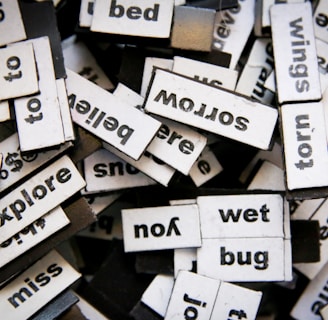
"I don't understand," my new student said during our first lesson. "I completed an entire app course. I scored 95% on all the vocabulary tests. I know over 1,000 German words."
She paused, frustrated. "So why does speaking still feel impossible?"
This is a conversation I have constantly - with talented, motivated learners who've done everything "right." They've studied diligently. They've memorized vocabulary lists. They can recognize words when they see them.
But when they try to speak? The words won't come.
This is what I call the vocabulary illusion: the gap between the words you know and the words you can use.
And it's one of the most common - and most frustrating - experiences in language learning.
The good news? Once you understand what's actually happening, you can fix it. And that's exactly what we do.
The difference between passive and active vocabulary
Your brain stores vocabulary in two completely different ways.
Passive vocabulary (recognition): Words you understand when you read or hear them. You recognize them. You know what they mean. But you don't necessarily use them.
Active vocabulary (production): Words you can recall and use spontaneously when speaking or writing. These are the words that come to you naturally, without searching.
The gap between these two can be massive.
You might recognize 3,000 words when reading. But when speaking? You might only have access to 500 of those words in the moment. The rest are locked in your passive storage, unavailable when you actually need them.
This isn't a flaw in your learning. It's how human memory works.
Why flashcards alone don't make you fluent
Flashcard apps are fantastic for building passive vocabulary. You see a word, you recall its meaning, you mark it as "known." Rinse and repeat.
But here's the problem: Flashcards train recognition, not production.
When you see "Katze" and think "cat," you're reinforcing the pathway from German to English. That helps you understand German when you read or hear it.
But when you want to say "I have a cat" in German, your brain needs the reverse pathway: from concept to German word. And if you've only practiced recognition, that pathway is weak or nonexistent.
This is why so many learners can understand far more than they can speak. They've built massive passive vocabularies but relatively small active vocabularies.
How many words do you actually need?
Let's talk numbers, because this might surprise you.
Basic conversation: 500 - 1,000 words
With just 500 - 1,000 of the most common words, you can handle everyday conversations, express basic needs, and navigate most daily situations. This is sometimes called "survival level" - not elegant, but functional.
Conversational fluency: 2,000 - 3,000 words
This is often considered the threshold for "conversational fluency" - you can participate in social situations and workplace conversations without constantly searching for words.
With 2,000 - 3,000 active words (words you can actually use, not just recognize), you can:
Have natural conversations on familiar topics
Express opinions and preferences
Handle most everyday situations comfortably
Understand movies and TV shows (with some effort)
Professional fluency: 5,000 - 8,000 words
With 5,000 - 8,000 active words, you can:
Discuss complex topics in your field
Read professional documents
Write formal emails and reports
Attend meetings and presentations confidently
Native-like fluency: 10,000 - 20,000+ words
Native speakers typically have active vocabularies of 20,000 - 35,000 words (and passive vocabularies even larger). However, you don't need anywhere close to that number to function excellently in a language.
The 80/20 principle of language learning
Here's the really encouraging news: The 1,000 most common words in any language account for about 80-85% of everyday speech.
This means that if you master - truly master, not just recognize - 1,000 high-frequency words, you can understand and participate in the vast majority of normal conversations.
The remaining thousands of words account for:
Specialized vocabulary (technical terms, academic language)
Literary or formal language
Uncommon words that appear occasionally
Synonyms and variations
You don't need to know every word for "beautiful" (lovely, gorgeous, stunning, exquisite, radiant). You need one or two that you can use automatically.
Why knowing words isn't the same as using them
Let's go back to my student who knew 1,000 words but couldn't speak.
The problem wasn't knowledge. It was retrieval.
Knowledge = "I've seen this word before, and I know what it means."
Retrieval = "When I want to express this idea, this word comes to me automatically."
There's a massive difference.
You can know that "Wochenende" means "weekend" in German. But when you're trying to tell someone about your Saturday, does that word surface in your brain automatically? Or do you have to pause, think, search, and sometimes give up?
That's the difference between passive and active vocabulary.
How to convert passive words into active words
So how do you bridge this gap? How do you take those 1,000 words you "know" and turn them into words you can actually use?
1. Practice production, not just recognition
Instead of flashcards that show you "Katze → cat," create flashcards that force you to produce the word: "cat → ?"
Or better yet, use the word in a sentence: "I have a cat → ?"
This trains the pathway your brain actually needs when speaking.
2. Use spaced retrieval practice
The more times you successfully retrieve a word from memory, the stronger that pathway becomes. This is why language teachers are always harping on speaking practice - it's not about perfection, it's about retrieval.
Each time you recall and use a word, you're strengthening the neural pathway that makes it accessible next time.
3. Learn words in context, not isolation
Instead of memorizing "Apfel = apple," learn it in sentences:
"Ich esse einen Apfel." (I'm eating an apple.)
"Möchtest du einen Apfel?" (Would you like an apple?)
"Der Apfel ist rot." (The apple is red.)
Context gives your brain multiple hooks to grab onto. When you need the word, you're more likely to retrieve it because it's connected to actual usage patterns.
4. Focus on high-frequency words first
Don't waste time learning obscure vocabulary before you've mastered the common words. The top 1,000 most frequent words should be automatic before you worry about the next 5,000.
A frequency list for your target language is one of the most valuable tools you can have.
5. Speak (even when it's uncomfortable)
This is the hard truth: The only way to build active vocabulary is to use it. Speaking, writing, producing language under pressure - this is what converts passive knowledge into active ability.
You can study flashcards for years and still not speak fluently. But if you force yourself to speak regularly, even badly, your active vocabulary will grow exponentially.
The fluency paradox
I have noticed that students often feel less fluent as they improve.
Why?
Because beginners use their small active vocabulary with confidence. They know their 500 words cold, and they use them without hesitation.
But as you advance, you add more passive vocabulary. You start recognizing 3,000, 5,000, 10,000 words. And suddenly you're aware of all the words you can't use yet, even though you recognize them.
This creates the frustrating feeling of "I should know how to say this!"
But that awareness is actually a sign of progress. You're not less fluent - you're more aware of what fluency looks like.
The path forward
If you find yourself in this situation - you've studied a lot, you recognize tons of vocabulary, but you still can't speak - don't despair.
You're not failing. You've just been training the wrong skill.
It's like learning to swim by reading about swimming. You might know all the theory, all the techniques, all the proper form. But until you get in the water and actually do it, you won't swim.
Language is the same. You need to speak. Badly at first. Slowly. With mistakes. But speak.
And with each conversation, each sentence you produce, each word you successfully retrieve – you're converting that passive knowledge into active ability.
That's when the vocabulary you've learned starts becoming the vocabulary you can use.
And that's when you start actually speaking the language.
Ready to turn your vocabulary knowledge into speaking ability?
At Linguages, I help students bridge the gap between knowing words and using them - through conversation practice, targeted exercises, and the kind of real-world speaking that builds active vocabulary.
Whether you're learning German, English, Russian, ... or working on your multilingual communication skills, I can help you make the leap from studying to speaking.
Book a consultation and let's turn your passive vocabulary into confident, active fluency.
What's your vocabulary size in your target language? And can you actually use those words when speaking? Share your experience in the comments!